

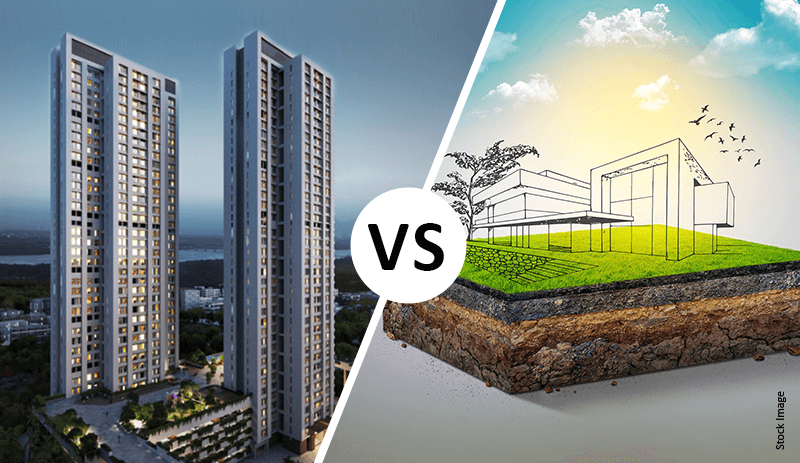
Two cousins, let us call them Imran and Shafiq, once had exactly the same amount to invest. Imran bought a small flat in an established part of Dhaka and rented it out. Shafiq bought a plot on the outskirts and waited. Both thought they had made the smarter move.
Years later, at a family wedding, they compared notes. Imran had a steady rent coming in, a few repair bills and a tenant who never paid on time. Shafiq had no income at all, but a plot that people kept asking about. Neither could say who was really ahead, because they were counting different things.
The cousins are made up, yet the argument is real, and it plays out in living rooms across Greater Dhaka. Should you put your money into land or into a flat? The honest answer is that it depends on how you measure wealth, how long you can wait and what you need your money to do in the meantime.
This guide walks through the question without taking sides too early. We will look at how each asset builds value, test them with a simple ten year example, count the hidden costs and then help you decide what fits your own situation.
The Short Answer: It Depends on How You Measure Wealth
Long term wealth from property comes from three places. There is the rise in value over time, there is any income the property earns along the way, and there are the costs that shave off both. A fair comparison has to count all three.
Plots tend to lean on the first source. They usually earn no rent, so everything rides on appreciation. Apartments split the work. Their price may grow more slowly, but rent adds a second stream, and you can live in them yourself.
That means neither asset wins in every scenario. A plot can beat a flat when land values climb strongly, while a flat can come out ahead when the market is flat and rent does the heavy lifting. The rest of this article puts numbers around that idea.
What the Greater Dhaka Property Market Looks Like Now
Greater Dhaka is not one market. The core, with areas like Gulshan, Dhanmondi and Mirpur, is crowded and expensive, and most of the supply there is apartments. The fringe and the corridors beyond it, such as Savar, Keraniganj and the Dhaka-Mawa route, are where larger plots and planned townships appear.
Land has been the headline performer over the long run. A UNB feature on Dhaka’s housing pressure states that land prices in Dhaka rose by about 2,700 percent between 2000 and 2021. A study in the Bandung Journal of Global South likewise tabulates steep land price increases across the city and its fringe areas.
Past performance is a story about the past, though. Those gains started from a low base, in a city that was growing fast and had few alternatives. They do not guarantee the next twenty years, and they describe a city average, not any single plot.
The outer corridors are also getting crowded with supply. The Business Standard counted about 200 housing projects along the Dhaka-Mawa-Bhanga Expressway alone. More plots on offer means more competition when you eventually want to sell.
How a Plot Builds Wealth
A plot has a simple appeal. Land does not age, it has no lifts to repair and it asks very little of you once the paperwork is clean. Its value tends to follow roads, drainage, nearby development and the general pull of the city.
Flexibility is another strength. You can hold the land, build a home on it later, sell it in parts or develop it with a partner. An apartment gives you far fewer options, because the unit is what it is.
The weaknesses are just as clear. A plot usually earns nothing while you wait, so you carry the cost of idle capital. Selling can take months, especially in outer areas where buyers are fewer. And the biggest danger is legal, since an unclear title or a boundary dispute can freeze the whole investment.
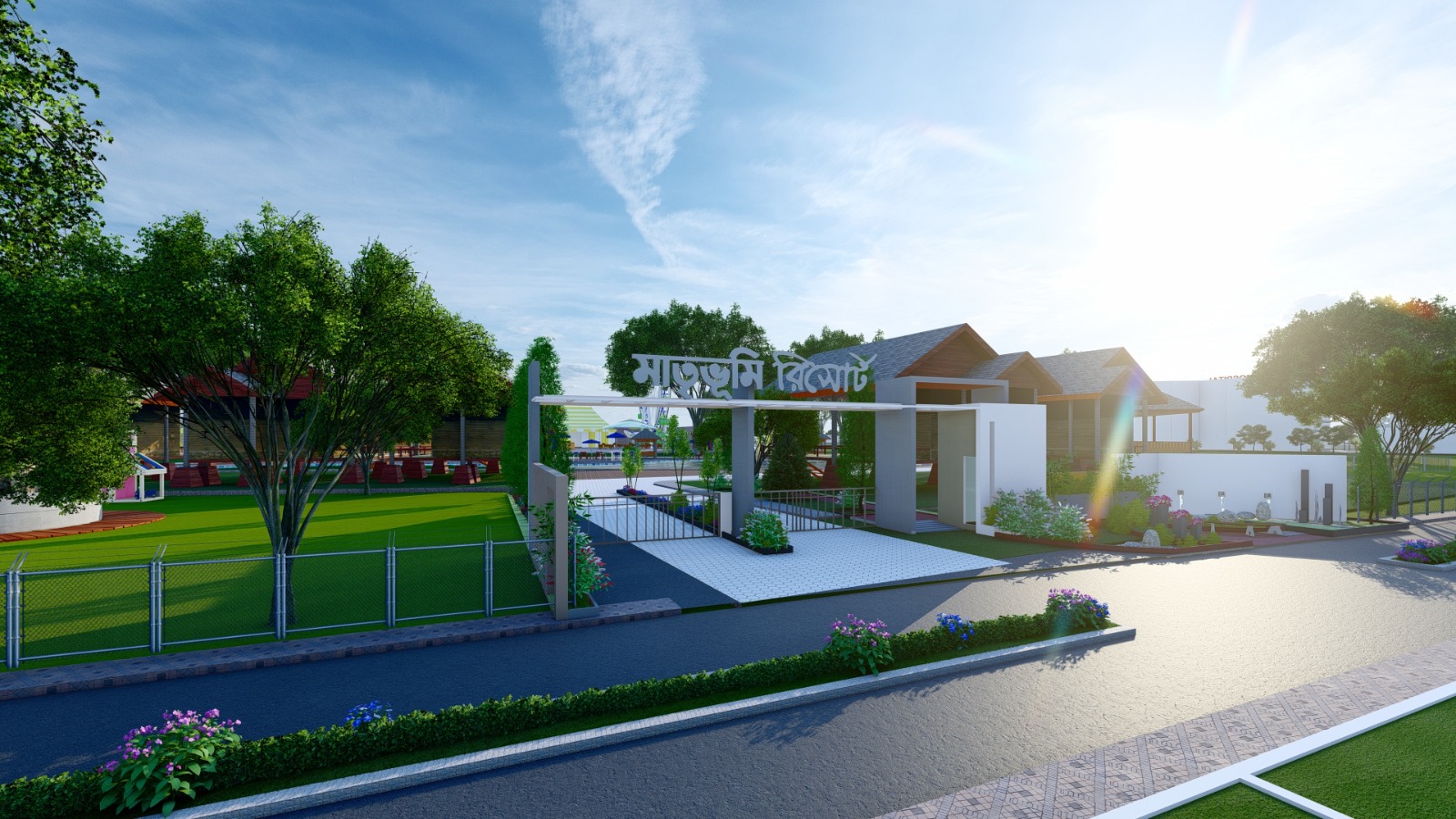
A planned township reduces some of these risks, because roads, utilities and civic spaces are designed in advance. Matribhumi City, for example, lists 3,707 plots across about 750 bighas, with plot sizes from 3 to 20 katha and roads from 25 to 100 feet wide. Even so, you should separate what is built today from what is only planned.
How an Apartment Builds Wealth
An apartment works on two levels. You can rent it out and collect income, or you can move in and stop paying rent yourself. Either way, the flat starts doing something for you from the first month.
Apartments are also easier to size. A smaller flat needs less capital than a good plot in a comparable location, and a home loan can spread the cost over years. For a first time investor, that lower entry point matters a great deal.
The trade off is that part of what you buy is a building, and buildings age. Maintenance, service charges and eventual repairs reduce what you keep. In a mature area much of the value sits in the share of land under the building, so the quality of the location carries enormous weight.
Delivery risk deserves a mention too. If you buy an under construction flat, you depend on the developer finishing on time and to specification. Check that the developer is registered under the Real Estate Development and Management Act, 2010, and look at what they have already handed over.
Rental Yields in Dhaka: What the Numbers Suggest
Rent is the apartment’s main advantage, so it pays to look at realistic yields instead of optimistic ones. A 2026 secondary market analysis by Concord Property Solutions, using public asking rent and price data, estimated gross yields in a fairly modest range.
| Area | Indicative gross rental yield | 12 month asking price reading |
|---|---|---|
| Gulshan | about 4.7 percent | Strong positive |
| Mirpur | about 4.5 percent | Not stated in the source |
| Banani | about 3.8 percent | Positive |
| Uttara and Bashundhara | about 3.2 to 3.3 percent | Bashundhara negative; Uttara not stated |
| Dhanmondi | about 2.7 percent | Slightly negative to stable |
Treat these as signposts, not promises. They come from asking prices and asking rents, which are not the same as what deals actually close at. Other online guides quote higher yields, sometimes between five and seven percent, and the gap between sources is itself a lesson. Always work out the yield for the exact flat you are considering.
Remember too that gross yield is before costs. Vacancy, maintenance, service charges and taxes bring the net figure lower. A yield of four percent on paper may behave like three in your bank account.
A Ten Year Example: Tk 1 Crore in a Plot or an Apartment
Numbers make the trade off easier to feel. The example below is hypothetical. It is not a forecast, and it does not describe any real property. It assumes Tk 1 crore goes into either a plot or a flat, and compares three kinds of market over ten years.
For the plot, annual value growth is 4, 8 and 12 percent in the slow, steady and strong cases. For the apartment, price growth is 3, 5 and 7 percent, and it earns net rent equal to 3 percent of the starting value in year one, rising with the price. Rent is simply added up and not reinvested.
| Market | Plot value (Tk crore) | Apartment value (Tk crore) | Net rent collected (Tk crore) | Apartment total (Tk crore) |
|---|---|---|---|---|
| Slow | 1.48 | 1.34 | 0.34 | 1.69 |
| Steady | 2.16 | 1.63 | 0.38 | 2.01 |
| Strong | 3.11 | 1.97 | 0.41 | 2.38 |
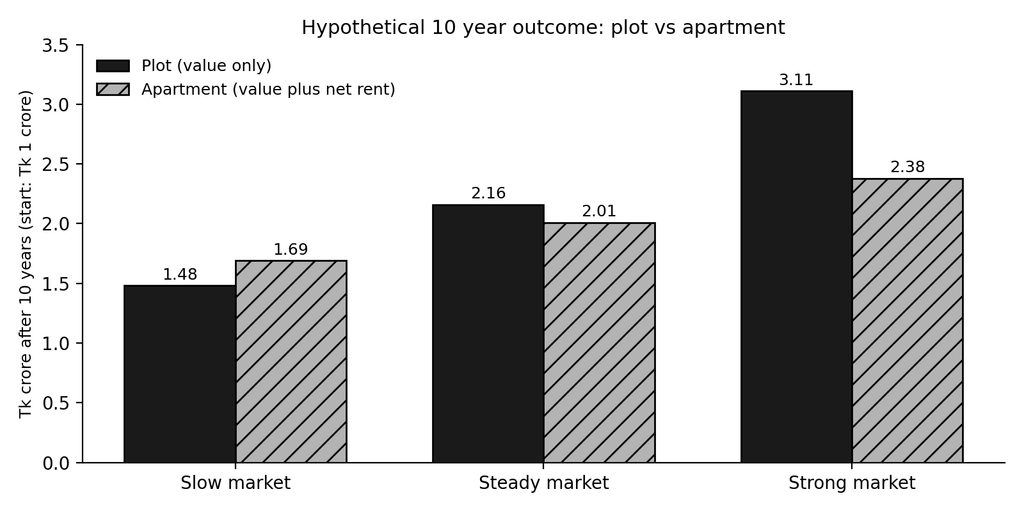
Read the pattern, not the exact figures. In the slow case the apartment comes out ahead, because rent compensates for weak price growth. In the steady case the two are close. In the strong case the plot pulls well ahead, since appreciation compounds while the flat is held back by lower price growth.
A rough break even is worth noting. With these assumptions, a plot needs to grow at roughly 7 percent a year to match a flat that grows 5 percent and earns 3 percent in net rent. If you honestly expect less than that from a particular plot, the flat may serve you better.
This example also leaves out several real world drags. Purchase costs, vacancy, financing, taxes and the time it takes to sell are all missing. They hit different assets differently, which brings us to the next section.
Costs That Quietly Eat Into Returns
Property in Bangladesh carries transaction costs that are easy to underestimate, and they change often. According to Dhaka Tribune, the proposed budget for 2025 to 2026 cut maximum land registration fees by up to two percent and lowered the tax collected at source on land transfers from 8, 6 and 4 percent to 6, 4 and 3 percent depending on location.
Two years earlier, Dhaka Tribune reported that the land registration tax in RAJUK areas rose from 3 to 4 percent in the 2023 to 2024 budget, and that gain tax on the sale of flats was increased as well. Rules shift from budget to budget, so check the current rates with a lawyer or the National Board of Revenue before you sign anything.
Beyond taxes, think about the ongoing costs of each choice.
- For a plot: land development tax, boundary protection or fencing, and the cost of keeping an eye on it, especially if you live far away.
- For an apartment: service charges, repairs, periods without a tenant, and eventual renovation.
- For both: legal checks, agent fees if you use one, and the cost of capital tied up while you wait.
One more caution. An older Daily Star report described how deeds were often registered at values well below the real price to reduce taxes. Whatever the practice in the past, a deed that shows a very low price can complicate your records, your tax position and your future sale. Ask a professional how to document your purchase properly.
Plot vs Apartment: A Side by Side Risk Comparison
| Factor | Plot | Apartment |
|---|---|---|
| Income | None until sold or developed | Rent, or saved rent if you live in it |
| Entry cost | Often higher for a good location | Can start lower, loans are easier |
| Upkeep | Low, mostly protection and paperwork | Ongoing maintenance and service charges |
| Main legal risk | Title, mutation and boundary disputes | Developer delivery and approvals |
| Liquidity | Slower, depends on the area | Often easier in established areas |
| Value driver | Location, access and development | Location, building quality and rent demand |
| Flexibility | Hold, build, divide or develop | Live in it, rent it or sell it |
Look down the right column and you will see that the apartment trades some upside for steadier cash flow. Look down the left and you will see that the plot trades income for flexibility and long term potential. Neither column is better. They suit different people.
Which One Fits Your Situation?
A good decision starts with your own circumstances, not with a headline about what other people earned. A few typical situations show how the choice can shift.
- You can wait ten years or more and do not need income. A plot, or a mix tilted toward land, can make sense, as long as the title is clean and you accept the slower sale.
- You want money coming in. An apartment in an area with real rental demand serves this need better, though you should work out net yield, not headline yield.
- You have limited capital. A smaller flat, or a modest plot in a planned project, may be more realistic than stretching for a large asset.
- You live abroad. Think carefully about management. A plot needs little day to day care but needs a trusted person to watch it, while a flat needs a manager for tenants and repairs.
- You may need the money soon. Neither asset is fast to sell. Keep a cash reserve and avoid putting short term savings into either.
Why Many Investors Hold Both
The plot versus apartment framing assumes you have to pick one. You do not. Holding both is a classic case of diversification, a principle the US Securities and Exchange Commission explains in plain terms on Investor.gov. It means spreading money across different assets so that no single one decides the outcome.
A flat provides rent and some stability. A plot provides long term upside and flexibility. Together they cover each other’s weak points, and the split can change as your life does. We explored this idea in depth in our guide to risk diversification in real estate.
A practical approach is to start with the asset that matches your most urgent need, then add the other as your capital grows. Someone who needs income might begin with a flat, and someone building for a child’s future might begin with land.
Where Matribhumi City Fits for Plot Investors
For readers leaning toward land, Matribhumi Developer and Properties Ltd. offers plots at Matribhumi City. According to the project details on the Matribhumi website, the project sits about 18 km from Dhaka Zero Point, adjacent to Nimtola on the Dhaka-Mawa Expressway.
The listed features include three sectors and four blocks, a VIP zone of 71 plots and a lake about 0.8 km long running through the project. Planned civic amenities include parks, schools, a hospital and community facilities. You can study the project layout and the project location pages to see how it is arranged.
Be realistic about what a plot like this is. It is a long term land holding, so it will not earn rent, and its value will depend on how the surrounding corridor and the township itself develop. Ask which amenities exist today and which are scheduled for later, and get timelines in writing.
The practical steps are simple. Look at the current price list and the project brochure, arrange a site visit, and put your questions through the contact page. You can also read about the company on the About page and see the available properties.
Due Diligence Checklists for Both Options
Before buying a plot
- Confirm ownership history and ask for the saof kabala deed.
- Verify mutation, khatian and land tax records at the relevant office.
- Check the land use classification and any applicable area plan.
- Walk the boundaries and confirm access roads in person.
- Ask what infrastructure exists now and what is only promised.
- Have an independent lawyer review the agreement and payment schedule.
Before buying an apartment
- Check the developer’s registration and the building approvals.
- Visit completed projects and speak with existing owners.
- Review the share of land attached to your unit and the common area rules.
- Ask about service charges, parking and what the handover includes.
- Look at rental demand nearby by checking real listings and how long they stay open.
- Have a lawyer read the allotment and sale agreements carefully.
Common Mistakes to Avoid
- Judging an asset by its best year or its best story. One friend’s success says little about your own plot or flat.
- Counting appreciation but ignoring costs, vacancy and the time to sell.
- Buying a plot you have never seen, in an area you have never visited.
- Assuming headline rental yields are what you will actually take home.
- Putting all your money in one project or one developer.
- Relying on guaranteed return promises, which no honest seller of property can make.
Almost every item on that list comes from hurry. Property rewards patience and punishes assumptions, so give yourself time to check.
Frequently Asked Questions
Which gives higher long term returns, a plot or an apartment in Dhaka?
It depends on the market and the specific asset. Plots can win in strong appreciation scenarios, while apartments can match or beat them when price growth is modest and rent is reliable. Our ten year example shows both outcomes.
Is land safer than a flat?
Neither is automatically safer. Land carries title and liquidity risks, while flats carry developer, maintenance and vacancy risks. Safety comes from verified documents and sensible sizing.
Can I buy both a plot and an apartment?
Yes, and many investors do. Combining them gives you rent from one and long term upside from the other, which spreads your risk.
How much should I budget for registration and taxes?
Rates change with each national budget and vary by location, so there is no single safe number. Ask a lawyer for a current estimate before you commit, and include it in your return calculations.
Final Thoughts: Choose the Asset That Matches Your Life
Go back to Imran and Shafiq. Imran had income and a few headaches. Shafiq had patience and a plot people wanted. Which one did better depends on what each of them needed, how long they could wait and what the market did in between.
That is the real answer to the plot versus apartment question. Wealth is not only the number on a sale deed. It is also the rent you collected, the costs you avoided and the sleep you got along the way.
Pick the asset that fits your horizon and your cash needs, verify every document, and consider holding both over time. If land is part of your plan, start by exploring the Matribhumi properties page and ask your hardest questions before you decide.