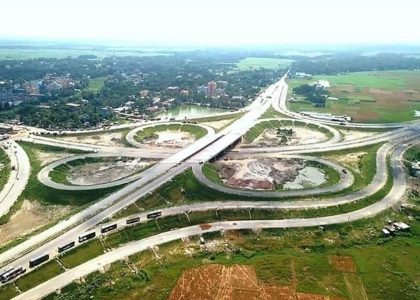


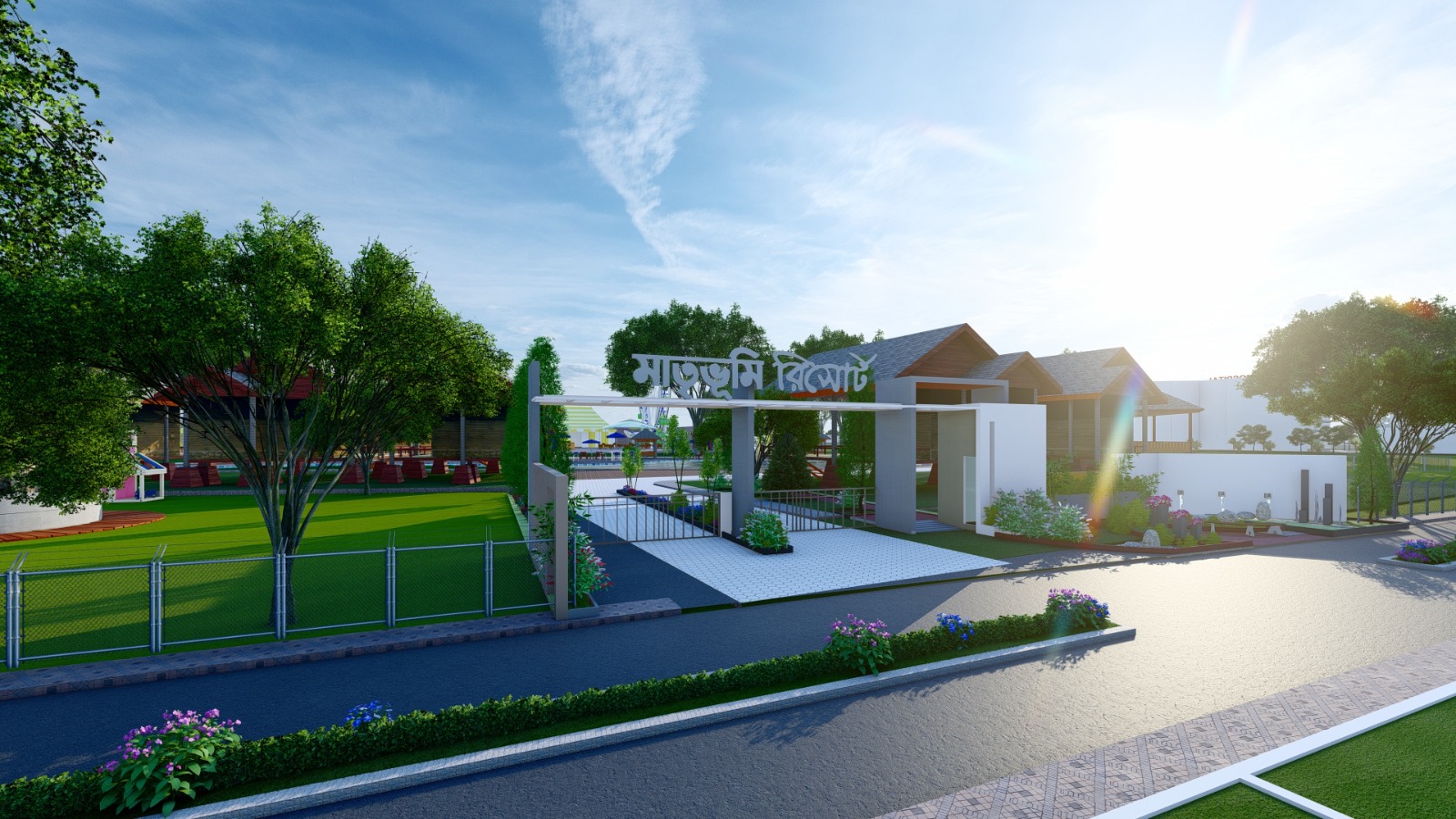
Let us call him Mizanur. He spent years working abroad, saving carefully, and when he came home he bought a plot in a lane that looked perfect on a sunny afternoon. Then the monsoon arrived. The road turned to mud, the drain overflowed and the electricity came and went. He had land, but he did not yet have a neighbourhood.
Mizanur is a fictional character, though his story will sound familiar to many people who have bought land on their own. A plot is only one part of a good place to live. The roads, the drainage, the lighting, the open space and the feeling of safety around it matter just as much.
That gap is exactly what planned communities try to close. A gated land project is designed as a whole, with shared roads, utilities and services, and with controlled entry. For many buyers it sounds like a cleaner answer to a messy problem.
But is it really better? This article looks at the promise and the evidence side by side. We will cover security, amenities, costs and approvals, then give you a way to judge any project before you commit.
What a Planned Community Actually Is
A planned community is a residential area laid out in advance by a developer or authority. Instead of plots appearing one by one beside whatever road happens to exist, the whole area is designed together. Streets, blocks, drainage, open spaces and community buildings are all part of the original plan.
A gated land project adds controlled access. There is usually a main entrance, a boundary and some form of security presence. Residents and visitors pass through a managed point instead of walking in from any direction.
Notice that these are two separate ideas. Planning is about layout and services. Gating is about access. A project can be well planned and lightly gated, or tightly gated and poorly planned. The best ones do both well, and the worst do neither.
It also helps to separate land projects from finished housing. In a land project, you buy a plot and build later, so the quality of the shared infrastructure matters even more. You are relying on the developer to provide the setting for a home that does not exist yet.
Why Planned Communities Are Gaining Ground Around Dhaka
The simplest reason is that much of Dhaka grew without a plan. A Business Standard analysis reported that only about 30 percent of the city is planned, and that community facilities have not kept pace with population growth.
Density tells the same story. A UNB special report noted that the Dhaka area holds close to 20 million people at a density above 50,000 per square kilometre. Living that close to everything is exhausting, and many families are looking for more space, quieter streets and cleaner surroundings.
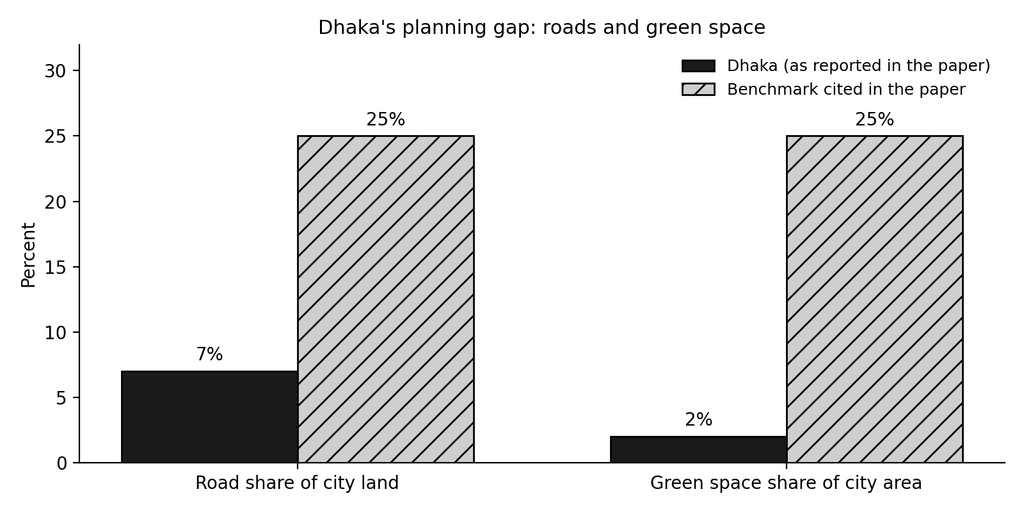
The open space numbers are even starker. A 2025 academic paper on building deviations in Dhaka reports that green area fell from 17 percent in 1989 to about 2 percent in 2020, and that roads cover about 7 percent of land against a commonly cited 25 percent benchmark. These figures come from one paper and are contested in places, but the direction is hard to dispute.
When the city cannot offer room to breathe, people look outward. Developers have followed, and the corridors beyond Dhaka are filling with private projects. The Daily Star’s property supplement notes that Purbachal alone is offering more than 25,000 residential plots, alongside many private schemes.
More choice is welcome, but it also raises the stakes. Not every project that calls itself planned is planned well, and that is where careful buyers earn their advantage.
The Security Question: What Gates Can and Cannot Do
Security is the first thing most buyers mention. A boundary wall, a gate and a guard feel reassuring, and for good reason. They make it harder for strangers to wander in, and they give residents a clear point of contact when something goes wrong.
The research, however, is more mixed than the brochures suggest. A study of two low and middle income communities in Kuala Lumpur, published through the International Islamic University Malaysia, found higher crime in the gated community than in the non-gated one. The authors concluded that gated communities are not automatically safer.
A 2024 study of gated and non-gated neighbourhoods in Quetta, Pakistan, summarised on DOAJ, found that past experience of crime shaped feelings of safety in both kinds of community. It also described how gating can encourage micro-segregation.
Other work points the opposite way. A qualitative study of two neighbourhoods in Subang Jaya, Malaysia, held at Universiti Utara Malaysia, concluded that gated schemes can help authorities prevent crime, although residents raised the cost of security fees as a real problem.
Taken together, the honest reading is that a gate helps only when it is staffed, maintained and paired with sensible design. A locked gate with a sleepy guard offers comfort, not protection. A well run entrance, good lighting, clear sightlines and active management can genuinely reduce risk and, just as importantly, make residents feel at ease.
Motivation is worth noting too. A paper on gated communities in England found that although fear of crime mattered, the major reason many buyers chose them was protecting property values. Security and value are linked, and buyers often care about both.
| Security feature | What it can do | What to ask the developer |
|---|---|---|
| Controlled entrance | Filters who comes in and creates a record of visitors | Who staffs it, in how many shifts, and how are guards trained |
| Boundary wall or fence | Marks the project edge and discourages casual entry | Is it complete along the entire boundary, or only at the front |
| CCTV | Deters some incidents and helps with investigation | Where are cameras, who monitors them and how long is footage kept |
| Street lighting | Improves safety and comfort after dark | Is it installed now, and who pays for power and repairs |
| Patrols and response | Gives residents a real person to call | What is the response process, and who is accountable |
Amenities: Where Planned Communities Really Pull Ahead
If security evidence is mixed, the case for amenities is stronger. This is where planning makes the clearest difference. Shared infrastructure is cheaper and better when it is designed once for everyone than when each household improvises.
Think of the basics that make daily life work. Wide roads that two vehicles can pass on. Drains that carry water away instead of sitting outside the gate. Reliable power and water connections. Waste collection that actually happens. These are not luxuries, but in unplanned areas they are often missing.
Then come the quality of life features. Parks for children, a playground, a mosque within walking distance, a school nearby and open space to walk in the evening. A lake or green belt adds something money cannot easily buy in a crowded city, which is calm.
| Amenity | Everyday benefit | What to verify on site |
|---|---|---|
| Wide internal roads | Easier access, safer driving, room for utilities | Actual road widths and surface, not just plan drawings |
| Drainage system | Less waterlogging in the rainy season | Whether drains are built and connected to an outlet |
| Parks and playgrounds | Safe space for children and families | Whether the land is marked, built or only promised |
| Water and waste systems | Cleaner and more reliable daily living | Treatment plants, collection routes and who runs them |
| Schools, mosque, health care | Services close to home | Which are built, which are planned and the expected dates |
| Lake or green belt | Cooling effect, scenery, recreation | Public access rules and who maintains it |
The most important column is the last one. In land projects, the gap between what is drawn and what is built can be large. A plan is a promise. Roads you can drive on and drains you can see are facts.
The Other Side: Costs, Rules and Social Trade-offs
A fair look at planned communities has to include the downsides. Several come up repeatedly in research and in everyday experience.
- Service charges. Security, cleaning, lighting and maintenance cost money. Residents usually pay through regular fees, so ask how much, how often and who decides increases.
- Rules and restrictions. Planned communities often set building standards, usage limits or design guidelines. These can protect everyone’s value, but they also limit what you can do with your own plot.
- Dependence on the developer. Early on, the developer runs everything. You need to know how and when responsibility passes to residents or an association.
- Social separation. The Quetta study mentioned earlier highlights micro-segregation as a side effect of gating. A walled community can feel disconnected from the wider area around it.
- Maintenance over time. Roads, lights and drains age. A project that looks excellent in year one needs a funded plan to still look good in year ten.
None of these points makes a planned community a bad choice. They make it a choice with ongoing obligations, which is different from buying an isolated plot and walking away. Go in knowing what you are signing up for.
Approvals Come Before Amenities
A beautiful master plan means little if the project lacks the right permissions. In the Dhaka region, private land development is guided by the Private Housing Project Land Development Rules of 2004. The Daily Star has reported that these rules cover the area under RAJUK, and that experts worry about unplanned land development where rules are weak or unevenly applied.
The concern is current, not just historical. The Daily Star property guide quotes an industry designer who worries that many private developments in Keraniganj have grown without complying with RAJUK’s regulations, raising the risk of hazards from unplanned growth.
So treat approvals as the foundation. Ask to see the project’s approval documents and check what exactly they cover. Verify the land title separately, because an approved plan on disputed land is still a problem. A professional lawyer can help you read what you are given.
As a rule of thumb, a developer who answers document questions quickly and in writing is showing you something good about how the project will be run. One who dodges is showing you something too.
Planned Community vs Standalone Plot
| Factor | Planned gated project | Standalone plot |
|---|---|---|
| Roads and drainage | Designed and built together | Depends on the neighbourhood and local authority |
| Security | Managed entry and shared arrangements | Individual measures, varies widely |
| Shared amenities | Parks, civic spaces, services planned in | Usually none unless the area develops |
| Ongoing costs | Service charges likely | Fewer shared fees, more personal upkeep |
| Freedom to build | Guidelines and standards may apply | Greater freedom within the law |
| Dependence on developer | High at first | Low once the title is clear |
| Resale appeal | Can be stronger if the project is well run | Depends on location and surroundings |
The right column is not worse, only different. Freedom and lower fees appeal to people who are comfortable managing everything themselves. The left column appeals to people who want the setting handled and are willing to follow shared rules.
Where Planned Communities Are Heading Next
The direction of travel looks clear, although specifics will keep changing. Planners are paying more attention to block based layouts and public space. A Bonik Barta report quotes a RAJUK town planner saying the new Detailed Area Plan emphasises block based housing to ensure better land use.
Buyers are changing too. After years of crowded flats and congested roads, more families now ask about green space, drainage and quiet before they ask about price. Projects that deliver those things visibly have a natural edge.
Expect questions about governance to grow louder as well. Residents want to know who manages the community in ten years, how fees are set and how disputes are handled. The communities that answer these questions openly will earn trust, while those that stay vague will struggle.
Sustainability will matter more too. Water treatment, waste management, shade trees and sensible drainage are no longer decorative extras. They decide whether a community stays pleasant as it fills up.
A Simple Scorecard for Any Planned Land Project
Use this scorecard whenever you evaluate a gated project. Give each line a rating from one to five after you have seen the evidence, then look for weak spots instead of only adding up the total.
| Area | Questions to answer | Evidence to collect |
|---|---|---|
| Legal foundation | Are approvals, title and mutation records in order | Copies of approvals, deed history and lawyer review |
| Infrastructure delivered | What is built today versus promised | Photos, site visit notes and a dated delivery schedule |
| Security and management | Who runs the gate, lighting and patrols | Staffing details, contracts and a written security plan |
| Fees and governance | What will residents pay and who decides | Fee schedule and the plan for handing over to residents |
| Developer track record | Have they finished and maintained other projects | Visits to older projects and talks with residents |
Where Matribhumi City Fits
Matribhumi City is a planned land project by Matribhumi Developer and Properties Ltd. According to the project details on the company website, it covers 750 bighas across three sectors and four blocks, with 3,707 plots in sizes from 3 to 20 katha. Internal roads range from 25 to 100 feet wide.
The listed civic amenities include lakes, parks, playgrounds, mosques, schools, a hospital, community centres, libraries, gyms and parking zones. Utility services mentioned include water treatment plants and waste management systems. The project is described as adjacent to Nimtola on the Dhaka-Mawa Expressway, about 18 km from Dhaka Zero Point, with a lake of around 0.8 km running through it.
That is a substantial list, and it is the kind of layout the planning logic of this article favours. Still, apply the same scorecard you would to any project. The details I reviewed do not describe specific security arrangements, so ask directly about gate staffing, CCTV, lighting, patrols and who pays for them.
Also separate what exists from what is planned. Ask which roads, drains, parks and facilities are already built, which are under construction and which are scheduled, with dates in writing. A site visit is the best way to do this, and Matribhumi offers one through its site visit page.
To explore further, see the project layout, the project location and the current price list. The project brochure and the About page give more background, and you can raise questions through the contact page.
What to Look at During a Site Visit
Brochures show the best angle. A site visit shows everything else. Go with a notebook, and if possible take a family member or a friend who will ask different questions than you would.
- Drive or walk the main road and several internal roads, not just the showcase stretch.
- Look at drains and low areas, especially if you are visiting in or soon after the rainy season.
- Check the boundary. Is it marked, fenced or walled all the way around?
- Stand at the entrance. See who is there, how visitors are handled and whether it feels organised.
- Find your plot or its block and confirm its access to a finished road.
- Ask to see any amenity that is described as complete, and note which ones are only drawn.
- Talk to anyone already building or living nearby about water, power and daily conditions.
Take photographs with dates and keep them. If the situation changes later, you will be glad to have your own record.
Common Mistakes to Avoid
- Believing that a gate alone equals safety.
- Paying based on a master plan without seeing what has been built.
- Ignoring service charges until the first bill arrives.
- Skipping the legal review because the project looks professional.
- Assuming amenities will arrive on a promised date without a written schedule.
- Treating any promise of guaranteed price growth as fact.
Most of these mistakes share a root. They replace checking with trust. A good developer will welcome your questions, because answered questions build the confidence that sells plots honestly.
Frequently Asked Questions
Are gated communities actually safer?
Not automatically. Research is mixed, with some studies finding benefits and others finding no improvement or even higher crime. Safety depends on staffing, design and management, not on the presence of a gate alone.
What amenities should a good planned land project have?
At minimum, finished roads, working drainage, reliable utilities and waste arrangements. Parks, playgrounds, a mosque, schools and health facilities add real quality of life, provided they are built or clearly scheduled.
Do planned communities cost more to live in?
Often yes, because shared services such as security and maintenance are paid for through service charges. Ask for the fee schedule before you buy and check how increases are decided.
How do I check whether a project is approved?
Ask for the approval documents and have a lawyer confirm what they cover. Verify title and mutation records separately, since approval and ownership are different questions.
Final Thoughts: Look Past the Gate
Mizanur eventually learned what many buyers learn. The best plot is not simply the one with the most appealing price. It is the one with a setting that works, a developer who answers questions and paperwork that holds up.
Planned communities deserve the attention they are getting, especially in a region where so much growth has been improvised. Their strongest advantage is amenities, and their security benefit is real when it is run properly. Neither comes automatically with a gate.
If you are weighing a project near the Dhaka-Mawa corridor, start with the Matribhumi properties page, visit the site and put the scorecard to work. A good community will survive close inspection.