

A few years back, a friend of mine bought a small plot of land near Keraniganj. It was cheap, the seller was friendly, and the paperwork looked fine on paper. Fast forward to today, and that same plot sits behind a flooded lane with no drainage, no road wide enough for a rickshaw, let alone a car, and a neighbor who is now disputing the boundary line. He still has not built a single wall on it.
That story is not rare. It is, honestly, the default story for thousands of families who buy land near Dhaka every year without checking who planned it, if anyone did at all.
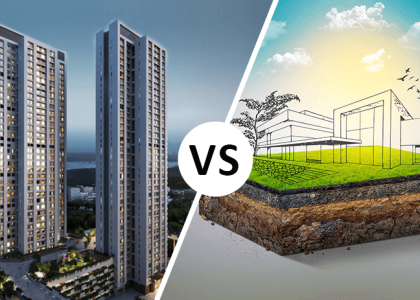
This is why the conversation around planned housing projects vs unorganized plots in Dhaka has become so loud lately. Land near the capital is not getting cheaper, and buyers are finally starting to ask the right questions before signing anything.
In this article, we will walk through why planned housing societies are pulling ahead of unorganized plots, what actually separates a real model town from a piece of raw land with a signboard, and how to judge a project like a professional before you commit your savings to it.
The Real Problem With Unorganized Plots Near Dhaka
Dhaka’s growth has been fast, but it has not been kind to planning. Researchers writing in the New Age newspaper noted that residential areas now cover around 62 percent of the city’s land, and of that, only about a quarter is actually developed under an approved plan. The rest grew without one.
That imbalance shows up everywhere. Streets that flood every monsoon. Electricity lines strung across rooftops instead of buried underground. No fire access, no drainage outlet, no green space for kids to actually play in.
A widely cited academic breakdown of Dhaka’s urban growth also pointed out that roughly 40 percent of the city’s population is squeezed into slum-like, unplanned settlements, largely because formal, planned housing has not kept pace with demand. The scale of the housing gap is enormous.
Buying an unorganized plot near Dhaka usually means buying into this exact pattern. You get land, yes. But you also inherit someone else’s failure to plan a neighborhood.
Why This Keeps Happening
Most unorganized plots are sold by individual landowners or small local brokers. There is no master plan, no shared infrastructure budget, and no single authority responsible for roads or drainage once the sale is done.
Everyone who buys a plot in that area is, in effect, on their own. Roads get built piecemeal, if at all. Drainage becomes a private problem instead of a shared system. And because there is no long-term plan, land value grows slowly, if it grows at all.
What Actually Makes a Housing Project “Planned”
This is where a lot of buyers get confused, because almost every land ad in Bangladesh uses the word “planned” whether it is true or not. A genuinely planned housing project has a few non-negotiable features.
Approved layout. The project has gone through an official development authority, most commonly RAJUK (Rajdhani Unnayan Kartripakkha), which is the government body responsible for regulating land use and approving master plans in and around Dhaka.
Wide, engineered roads. Not narrow dirt lanes that turn to mud in the rain, but properly measured avenue roads, often 40 to 60 feet wide, built to carry both daily traffic and emergency vehicles.
Underground drainage and water management. Real infrastructure quality in a housing project shows up below ground before it shows up above it. A functioning drainage system, sewage lines, and a water treatment setup prevent the waterlogging that plagues so much of greater Dhaka.
Utility planning. Electricity, gas, and internet lines that are planned into the layout from day one instead of added haphazardly after houses go up.
Shared amenities. Schools, mosques, parks, markets, and community spaces that are part of the original design, not an afterthought squeezed in later.
If a project cannot show you these on paper, with approvals attached, it is a plot with a nice brochure. Not a planned housing project.
Planned Housing Projects vs Unorganized Plots: A Side-by-Side Look
Sometimes a table makes the decision clearer than paragraphs ever could.
| Feature | Unorganized Plot | Planned Housing Project |
|---|---|---|
| Road width | Narrow, often under 15 feet | 40 to 60 feet avenue roads |
| Drainage | Absent or informal | Underground, engineered system |
| Legal approval | Often unverified | RAJUK or NHA approved |
| Utilities | Added later, inconsistently | Planned into the layout |
| Community amenities | Rare | Schools, mosques, parks, markets |
| Long-term value growth | Slow, unpredictable | Steadier, tied to infrastructure |
| Resale and financing ease | Harder to prove title clearly | Easier, with documented ownership |
None of this means every unorganized plot is a scam. Plenty of people have bought raw land near Dhaka honestly and built a home on it over the years. But the odds, the paperwork, and the long-term value all lean heavily toward planned developments.
Advantages of a Planned Model Town Over Private Plots
Let’s get specific about why a planned model town near Dhaka tends to outperform scattered private plots over time.
1. Documented, Verifiable Ownership
Planned projects go through a registration and approval process that leaves a paper trail. That paper trail is exactly what banks want to see before approving a home loan, and exactly what protects you if a dispute ever comes up.
2. Infrastructure That Actually Raises Land Value
There is a reason land near a new highway, bridge, or planned utility corridor appreciates faster than land in the middle of nowhere. Infrastructure quality is not a luxury add-on, it is one of the biggest drivers of real estate appreciation anywhere in the world, and Dhaka is no exception.
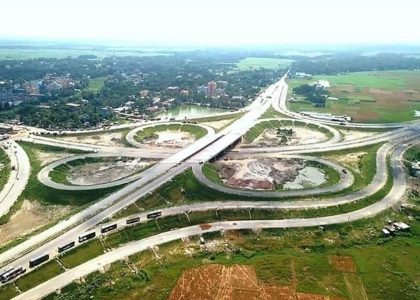
Projects sitting near major connectivity upgrades, such as the Dhaka-Mawa 300-foot highway leading toward the Padma Bridge, tend to benefit from that connectivity years before the surrounding raw land catches up in price.
3. A Safer, More Livable Environment for Families
Wide roads mean ambulances and fire trucks can actually reach a house in an emergency. Underground drainage means your street is not underwater every time it rains hard for two hours. A planned school and playground mean your children are not walking half an hour along a busy road just to reach a classroom.
These are not small conveniences. They are the difference between a house and an actual neighborhood.
4. Predictable, Structured Payment Options
Established housing projects, unlike most individual plot sales, usually offer installment plans that spread the cost over months or years. That structure makes ownership realistic for salaried buyers, not just people who can pay in a single lump sum.
How Modern Infrastructure Increases Land Value in Dhaka
It helps to look at this the way an economist would rather than the way a broker would.
Land value near any major city is driven by access. Access to jobs, access to schools, access to safe roads, and access to basic services like water and electricity. When infrastructure quality improves in an area, land value in that area moves with it, almost every time.
The World Bank funded a $100.5 million neighborhood upgrading project in Dhaka specifically to improve public spaces, roads, and community facilities, because the connection between livability and long-term urban value is well understood at the policy level, not just among real estate agents.
A planned housing project essentially front-loads that same kind of infrastructure investment into a single, coordinated development instead of waiting decades for the government to catch up piece by piece. That is a big part of why gated communities and model towns near Dhaka tend to see steadier appreciation than scattered plots waiting for roads that may or may not arrive.
Gated Community Life: What Amenities Actually Matter
“Amenities” gets thrown around loosely in real estate marketing, so it is worth being specific about what genuinely changes daily life in a planned housing complex.
- A playground where kids can actually be outside without crossing traffic
- A community center for gatherings, prayers, or simple neighborhood events
- A school and college within walking or short driving distance
- A market or super shop so daily errands do not require a long commute
- A mosque and, where relevant, other places of worship
- Basic emergency infrastructure, including a nearby fire station
- Green space and, where the project includes it, a lake or open water feature for cooling and recreation
None of these are extravagant asks. They are what most people already expect from a functioning neighborhood, whether they grew up in one or not. The gap is that unorganized plots almost never deliver them, while planned townships build them in from the start.
Smart Township Investment Near Dhaka: What “Smart” Actually Means
The phrase “smart city” or “smart township” gets used generously in marketing, so it is fair to ask what it should actually mean for a buyer evaluating an investment near Dhaka.
At minimum, it should mean a self-sustaining community setup, water treatment and waste management handled at the project level rather than left to individual households, wide roads built for both current and future traffic, and a location chosen with future connectivity in mind rather than just current cheapness.
Matribhumi Smart City, developed near Nimtala on the Dhaka-Mawa 300-foot highway, roughly twenty minutes from Motijheel, is one example built around exactly this logic. The project sits close to DOHS, the Central Jail area, and RAJUK’s Jhilmil project, with a layout that includes a water treatment plant, a waste management scheme, 60-foot-wide roads, a lake, a playground, a shopping mall, a school, a mosque, and a temple, along with six plot types and flexible installment options. You can review the full project details and amenities on the official Matribhumi Smart City website.
That combination, connectivity plus planned infrastructure plus documented approval, is really what “smart township investment” should mean in practice, rather than just a name on a signboard.
Why Buy a Plot in a Planned Housing Project Near Dhaka
If you strip away the marketing language, the decision comes down to a fairly simple comparison. An unorganized plot might cost less upfront, but it usually comes with hidden costs later: legal ambiguity, self-funded road and drainage work, slower value growth, and a longer wait for basic services to arrive, if they arrive at all.
A planned project asks for more structure and, often, a slightly higher entry cost, but it delivers documented ownership, engineered infrastructure, community amenities, and a location strategy built around future growth corridors rather than whatever land happened to be available cheaply.
For a family planning to actually live on the land, or for an investor thinking five to ten years ahead rather than just the next resale, that trade tends to favor the planned option more often than not.
How to Evaluate Any Housing Project Before You Book a Plot
Whether you are considering Matribhumi Smart City or comparing it against other projects near Dhaka, the same checklist applies.
- Ask for the RAJUK or National Housing Authority approval documents directly, and verify them rather than taking a brochure’s word for it.
- Visit the site in person, ideally during or right after heavy rain, so you can see how the roads and drainage actually perform under pressure.
- Check the road widths on the master plan against what you can measure on the ground.
- Ask who manages ongoing maintenance once homes are built, since infrastructure that looks good on day one can decay fast without upkeep.
- Compare the installment structure against your actual income, not just the advertised monthly figure.
- Talk to existing plot owners in the project if you can find any, since their experience will tell you more than any sales pitch.
Most developers who are confident in their project will welcome this kind of scrutiny rather than avoid it. If a seller gets defensive when you ask for documentation, treat that as useful information in itself.
The Environmental Side of Planned Development
There is another angle that buyers often skip past, and that is the environmental cost of unplanned growth. Waterlogging, poor waste management, and unchecked construction do not just make daily life harder, they degrade the land itself over time.
A public health study on Dhaka’s expansion found that unplanned urbanization has been directly linked to air pollution, inadequate water and sanitation, and overcrowding, all of which compound each other in neighborhoods that were never designed to handle the population living in them. The health consequences of unplanned growth are well documented.
A planned housing project, by contrast, is built with waste management and water treatment as part of the original design rather than a problem to solve after the fact. That is not just a comfort issue, it is a genuine quality of life difference that shows up in everything from mosquito control to how often a family gets sick from contaminated water.
Land that stays livable tends to stay valuable. Land that degrades environmentally, on the other hand, becomes harder to sell and harder to build on as the years go by, no matter how cheap it looked at the time of purchase.
Financing and Legal Peace of Mind
One thing that rarely comes up in casual conversations about land, but matters enormously once you actually try to act on it, is financing. Banks and financial institutions in Bangladesh are naturally cautious about lending against land whose title chain cannot be easily verified.
An unorganized plot bought through a private seller may have gone through several hands, sometimes with incomplete registration at each step. Untangling that history later, when you actually want to build, sell, or mortgage the land, can take months and sometimes years.
Planned projects that carry proper approval from RAJUK or the National Housing Authority give you a much cleaner paper trail from the start. That matters just as much for your children inheriting the property one day as it does for you trying to get a construction loan next year.
It is also worth asking any developer directly which certifications back their project. Environmental clearance, membership with recognized real estate bodies, and government registration are not just formalities, they are the difference between a project you can defend in court if a dispute ever arises and one you cannot.
Frequently Asked Questions
Is a planned housing project always more expensive than an unorganized plot? Not necessarily upfront, but the total cost of ownership usually favors planned projects once you account for road construction, drainage, utility connections, and legal verification that buyers of unorganized plots often end up paying for themselves, piece by piece, over several years.
How do I confirm a housing project is actually RAJUK approved? Ask the developer for the approval reference and, where possible, verify it directly with RAJUK rather than relying solely on what is printed in a brochure. A genuine developer will not hesitate to provide this.
Are installment plans common in planned housing projects near Dhaka? Yes, most established projects, including Matribhumi Smart City, offer flexible installment structures specifically because full upfront payment is unrealistic for most salaried buyers.
Does distance from Dhaka matter more than the project’s infrastructure? Both matter, but infrastructure quality often has a bigger long-term impact on livability and resale value than a small difference in commute time, especially as highway connectivity around Dhaka continues to improve.
What is the biggest red flag when evaluating a housing project? A seller who cannot produce clear approval documents, or who discourages you from visiting the site in person, especially during the rainy season when infrastructure problems are easiest to spot.
A Quick Word on Bangladesh’s Bigger Housing Picture
None of this happens in a vacuum. Bangladesh’s urban population has been growing quickly for decades, and most of that growth has concentrated in Dhaka rather than spreading across the country. Coverage in the Business Standard highlighted that around 60 percent of the nation’s urbanization is concentrated in Dhaka alone, which is a big part of why land and housing pressure in and around the capital keeps climbing. The imbalance in urban growth is stark.
That pressure is not going away soon. Which is exactly why buyers who choose planned developments over scattered, unorganized plots tend to be better positioned as Dhaka keeps expanding outward along its major highway corridors.
Final Thoughts
Buying land near Dhaka is one of the biggest financial decisions most families in Bangladesh will make. It deserves more scrutiny than a friendly broker and a hand drawn boundary sketch.
A planned housing project will rarely be the absolute cheapest option on paper. But when you account for drainage that actually works, roads that are wide enough for daily life, schools and markets within reach, and documentation that a bank will actually accept, the real cost comparison tends to flip in favor of planned developments like Matribhumi Smart City.
If you are weighing a plot near Dhaka right now, take the time to check the master plan, confirm the approvals, and walk the site yourself before you commit. You can also schedule a project visit and see the layout in person to judge it against everything covered here.
The land will still be there next week. A rushed decision, unfortunately, tends to stay with you a lot longer than that.